​+1 (917) 512-9523
99 Wall Street Suite 1672, New York, NY 10005​
[email protected]
 
 
Schedule A Meeting
Investment Science | NYC Consulting Services
  • About
    • Business Consulting in New York
    • The Wealth Almanac​
  • What We Offer
  • Who We Serve
  • Podcast
  • Insights
  • Case Studies
  • Testimonials
  • SageFusion
  • Contact Us
  • About
    • Business Consulting in New York
    • The Wealth Almanac​
  • What We Offer
  • Who We Serve
  • Podcast
  • Insights
  • Case Studies
  • Testimonials
  • SageFusion
  • Contact Us

Insights

Free Consultation

Determining When An Option Is Overpriced

8/7/2020

0 Comments

 
Picture
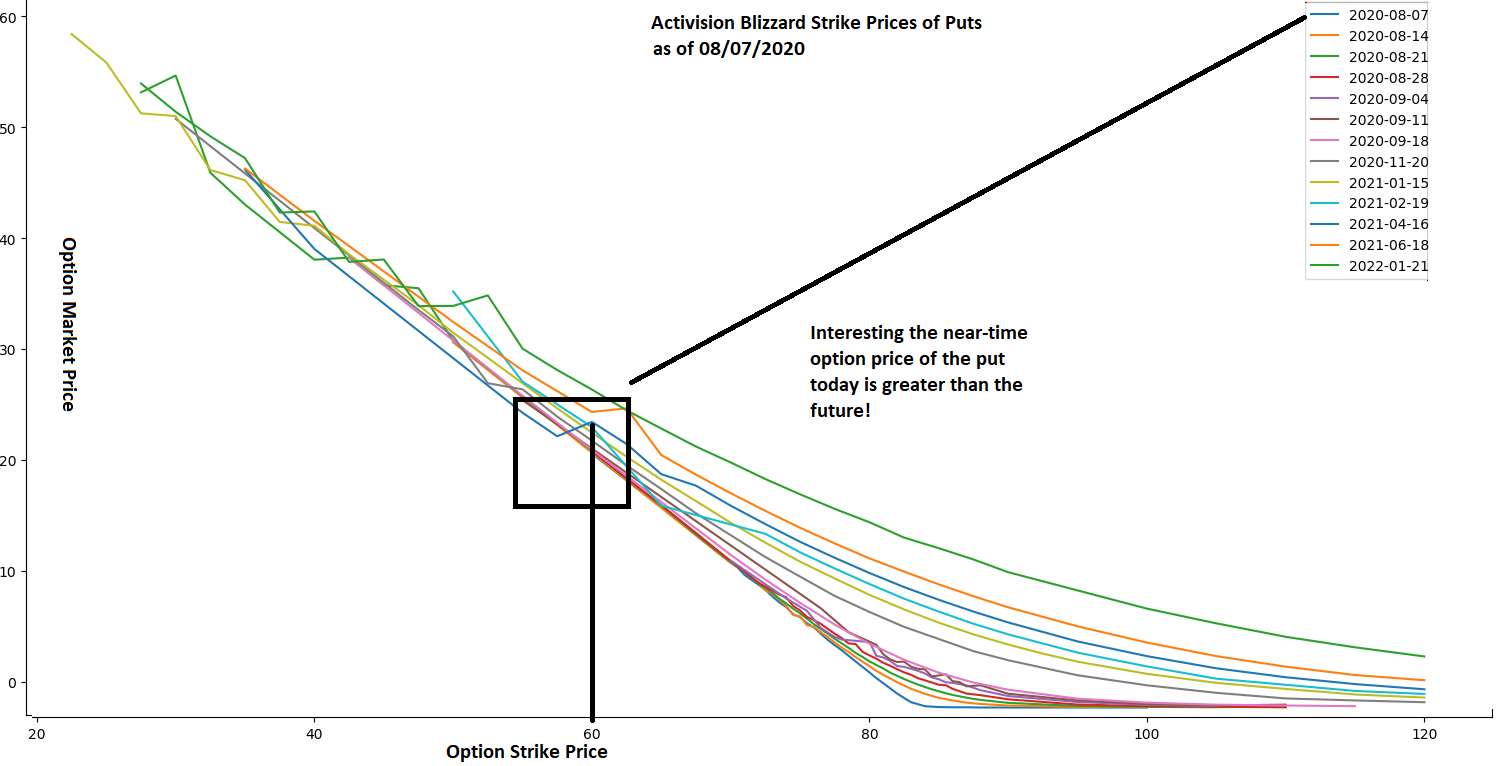
Investment Science has a product called Investment Lab where one is able to push a button and make money through numerous parameters. While 'Investment Lab' itself is not for sale, we can help firms solve issues such as finding optimal prices of financial instruments or build a similar product for your needs. Our firm created a graph in python, which is a general purpose programming language. The python library used was pylab, a graphing library in python. The purpose of this post is not to teach you how to code, but rather how to build interesting products from complex financial instruments in a simple programming language such as python.  What we did here was graph out a put option (a put option is a contract giving the owner the right, but not the obligation to sell or sell short a specified amount of an underlying security at a pre-determined price within a specified time frame). For the graph above, we used the black scholes formula (a mathematical model for pricing an options contract. In particular, the model estimates the variation over time of financial instruments. It assumes these instruments (such as stocks or futures) will have a lognormal distribution of prices. Using this assumption and factoring in other important variables, the equation derives the price of a call option).

What is interesting about the graph above is on August 7th, 2020 the near-term price of the put option, that expired on August 7th, is worth more than the other option prices into the future. Simply speaking, when there are no economic events (such as a company merger or a corporate earnings event) one would expect the derivatives price on 08/07/2020 (i.e. today) for the company, Activision Blizzard (Ticker symbol ATVI), to be less than the future option prices. - but it's not!

Now that you understand this post, please go to our next post on  Options Trading Arbitrage
get help with financial trading research
0 Comments

How To Minimize Retirement Portfolio Volatility

8/2/2020

0 Comments

 
Picture
We preface this post in that our firm is not licensed to provide financial advice to individuals, and this is just for your education.

What is a very interesting portfolio that Investment Science created was in the March 2020 coranvirus crash, when everybody was panicking, there was this portfolio we designed with our data-warehouse. We looked at the volatility of asset classes from each and every panic, and came up with the following for somebody who was 62. In summary we have bonds that pay in different dates in different currencies which diversifies risk.

1) GOLD CRASHED 60% IN 2009 AND 30% IN 2020, so it's not really the best for market panics.
2) Depending on your lifestyle, and how long you live one might need ~3 million to retire. You may need to count on social security. Likewise, look into renting out a house potentially. Otherwise one may want to sell the house and downsize it or buy more real estate to rent
         A. There could be a ton of deals in the next 2 years from this virus
      B. Rule of 72 dictates take the number 72/ divide by the interest rate, thats the number of years to double your money
      1) 38% of your retirement should be in stocks (Similar to Warren Buffet's advice in his books)
      2) 62% should be in bonds (Similar to Warren Buffet's advice in his books)
      3) We created this portfolio based off of knowing somebody in that age group hates risk, but giving them some upside international exposure on the bonds too on unrelated companies

Currency Exposure (Bonds all pay on different days which helps the currencies!!):
     A. Swiss franc 2%
     B.Norway Krona  2%
     C. South African Rand - 1%
     D. British Pound - 4%
     E. Euro - 4%
      F. USD - 87%

Buy: 62% Bonds especially because we are in a recession for 1-2 years (What's great is one has some exposure to different currencies too, and some very high return bonds, mostly investment grade bonds, the currency exposure may be able to amplify the returns from gold and oil from the currencies)

1) 2% of retirement  Pepsi Bonds ->  https://markets.businessinsider.com/bonds/1_250-pepsico-bond-ch0008941319 - 8% Yield (Pays in swiss franc) - Good historically swiss franc is worth more than the USD and it gives  you some currency diversification and the CHF shoots up whenever the market crashes here
2) 2% of retirement Albertson's Inc -> https://markets.businessinsider.com/bonds/6_625-albertsons-bond-2028-us01310qdb86 7.46% Yield (Pays in USD)
3) 2% of retirement  ADT https://markets.businessinsider.com/bonds/adt_corpdl-notes_201212-42-bond-2042-us00101jag13  8.03% Yield (Pays in USD)           
4) 2% of retirement American Express https://markets.businessinsider.com/bonds/dl-med-term_notes_201520-bond-2020-us0258m0dt32  7.56% Yield (Pays in USD)
5)  2% of retirement Genl Dynamics  https://markets.businessinsider.com/bonds/general_dynamics_corpdl-flr_notes_201820-bond-2020-us369550bb33  9.67% Yield (Pays in USD)
6) 2% of retirement Verizon https://markets.businessinsider.com/bonds/6_730-verizon-north-bond-2028-us362337ak38 8.04 % Yield (Pays in USD)
7) 2% of retirement Toyota https://markets.businessinsider.com/bonds/toyota_motor_credit_corpdl-flr_med-term_nts_201920-bond-2020-us89236tgp49 5.11 % Yield   (Pays in USD)
8)2% of Retirement United Health Group https://markets.businessinsider.com/bonds/unitedhealth_group_incdl-flr_notes_201720-bond-2020-us91324pdb58  5.92 % Yield   (Pays in USD)
9) 2% of Retirement Viacom https://markets.businessinsider.com/bonds/4_850-viacomcbs-bond-2034-us92553paz53  5.83 % Yield   (Pays in USD)
10) 2% of Retirement Catepillar - https://markets.businessinsider.com/bonds/caterpillar_finservices_corpdl-notes_201718-20-bond-2020-us14912hts93  8.32% Yield  (Pays in USD)
11) 2% Mortgage backed security AAA rated - https://markets.businessinsider.com/bonds/5_400-abn-amro-bank-bond-2026-xs0592463136   5.4 % Yield   (Pays in NOK) - this is awesome because oil should spike back up in  December, which means the currency conversion should rise in December and            payments are 1x per year
12) 1%  South African Bonds (Gives you exposure to gold) - https://markets.businessinsider.com/bonds/south_africa-_republic_of-bond-2040-zag000125980 - 10.21% Yield (Pays in ZAR [South African]-  - this is awesome                             because                  the ZAR currency should go up longer term due to gold, likewise it has              a potential to double as ZAR is at a historical low
13) 2% - USA treasury bills very safe - https://markets.businessinsider.com/bonds/united_states_of_americadl-flr_notes_201820-bond-2020-us912828y537 - 6.4% Yield (Pays in USD) 
14) 2% Burmingham, Alabama debt - https://markets.businessinsider.com/bonds/3_500-birmingham-city-of-bond-gb0000993211 - 11.14% Yield (Pays in British Pound) - Pound likely to go up to 40% value in next few years.
15) 2% China government debt - https://markets.businessinsider.com/bonds/china-_peoples_republic_of-Bond-2022-hk0000116407 - 8.69% Yield (Pays in Chinese currency) - This currency likely to increase by about 20% long term
16)  2% Clavas Securities PLC Debt - https://markets.businessinsider.com/bonds/clavis-securities-bond-2032-xs0302269096 - 6.9% Yield (Pays in Euro) - This currency will likely increase 30-50% long term
17) 2% Hypo Vorarlberg Bank AG Debt - https://markets.businessinsider.com/bonds/hypo_vorarlberg_bank-Bond-2020-at0000a10gb9 - 8.79% Yield (Pays in Euro) - This currency will likely increase 30-50% long term
18) 2% Bank of nova scotia - https://markets.businessinsider.com/bonds/bank_of_nova_scotia-_thedl-notes_201520-bond-2020-us064159gw01 5.44% Yield (Pays in USD) 
19) 2% Canadian Railyway -  https://markets.businessinsider.com/bonds/4_000-canadian-pacific-bond-ca136447ax71 - 9.59% Yield (Pays in GBP)
20) 2% New metro global - https://markets.businessinsider.com/bonds/dl-notes_201818-22-bond-2022-xs1839368831 - 8% Yield (Pays in USD)
21) 2% NordLB (German Bank) -  https://markets.businessinsider.com/bonds/norddeutsche_landesbank_-gz-nachrdl-ihss1748_v1424-bond-2024-xs1055787680   6.48% Yield (Pays in USD)
22)2% French Investment Bank - https://markets.businessinsider.com/bonds/soci%c3%a9t%c3%a9_g%c3%a9n%c3%a9rale_sadl-flr_nts_201621-und_regs-bond-usf43628c734 -    6.57% Yield (Pays in USD) 
23) 1% - https://markets.businessinsider.com/bonds/pyxus_international_inc-bond-2021-us018772as22 - 79.67% Yield (Pays in USD( - Junk Bond, they will need to pay you even if they go bankrupt, but I don't see any bad news)
24) 2% -https://markets.businessinsider.com/bonds/raiffeisen_bank_intldl-flr_med-term_nts_1520_90-bond-2020-at000b013628 - 10.37% Yield (Pays in USD)
25) 2% Interdevelopment Bank - https://markets.businessinsider.com/bonds/inter-american_dev_bankdl-flr_med-term_nts_201520-Bond-2020-us45818wbh88   - 5.45% Yield (Pays in USD)
26) 2% - African Development Bank - https://markets.businessinsider.com/bonds/african_development_bankdl-flr_med-t_notes_201620-Bond-2020-us00828ebs72 - 5.25% Yield (Pays in USD)
27) 2% - https://markets.businessinsider.com/bonds/swedbank_hypotek_abdl-mortg_cov_mtn_201520-bond-2020-xs1231116481 - 19% Yield  (Pays in USD)
28) 2% - https://markets.businessinsider.com/bonds/skandinaviska_enskilda_bankendl-med-term_nts_201520_144a-Bond-2020-us83051gad07 - 14.13% Yield   (Pays in USD)
29) 2%  barclays Investment Bank - https://markets.businessinsider.com/bonds/0_077-barclays-bank-Bond-2021-xs0126504421 - 13.11% Yield  (Pays in USD)
30)2% Swedbank - https://markets.businessinsider.com/bonds/swedbank_hypotek_abdl-mortg_cov_mtn_201520-bond-2020-xs1231116481 - 19.77% Yield (Pays in USD)
31) 2% - https://markets.businessinsider.com/bonds/golden_wheel_tianhldgs_coltddl-notes_201821-bond-2021-xs1751017218 - 14.39%  (Pays in USD)
32) 2% - https://markets.businessinsider.com/bonds/china_evergrande_groupdl-notes_201919-22-bond-2022-xs1982036961 - 13.02%  (Pays in USD)

Stocks - 32% Of  money could be technically in safe haven assets that could provide a 2% return while we wait for the stock market to finish crashing + there are some deals trading less than NAV:

1)  1% - Buy EWEM (barely dropped and less than NAV) -  safe
2) 2% - Buy  RAVI (barely dropped and less than NAV) - 2% Yield safe
3)  2% - Buy  GSY  (barely dropped and less than NAV) - 2% Yield safe
4) 2% - Buy  CYB   (barely dropped and less than NAV) - 2% Yield safe
5) 2% - Buy  LDRI (barely dropped and less than NAV) - 2% Yield safe
6) 2% - Buy  MBSD  (barely dropped and less than NAV) - 3% Yield safe
7)  2% - Buy  SCHO  (barely dropped and less than NAV) - 2% Yield safe
8) 2% - Buy  AGZ (Government agency bond etf backed by federal government) -  2% Yield safe
9) 2% - Buy GNMA  (barely dropped and less than NAV) - 2% Yield safe
10) 2% Buy LGOV (barely dropped and less than NAV) - 3% Yield safe
11)  2% Buy PHDG  (Good ETF) - Safe
12) 2% Buy  CBON   (barely dropped and less than NAV) - 3% Yield safe

***Stocks 1-10 you hold onto until the market hits bottom, but sell when ready to buy other stocks*****

13) 1% - Buy BTAL (Good ETF) - Hold onto this long-term dont touch it
14) 1% - Buy FUT  (Good ETF)  - Hold onto this long-term dont touch it
15) 1% - Buy  EMTY   (Good ETF)  - Hold onto this long-term dont touch it
16) 1% - Buy CLIX  (Good ETF)  - Hold onto this long-term dont touch it
17) 1% Buy DLBR (Good ETF)  - Hold onto this long-term dont touch it
18) 1% Buy IVOL (Good ETF)  - Hold onto this long-term dont touch it
19) 1% Buy FUT  (Good ETF)  - Hold onto this long-term dont touch it
20) 1% Buy GLDI   (Good ETF)  - Hold onto this long-term dont touch it
~~~~~~~~~~~~~~~~~

Some interesting purchases, when the market bottoms would be:
1) Specifically  Home Depot and XOM 
2) Airlines will go back up too keep an eye out as well as hotels + cruise ships

As of August 2nd, the portfolio is up about 50%, and interestingly enough the federal reserve bought all of those bonds after the dip because flight to safety dictates in market panics everybody sells all assets (that's why basically almost everything crashes outside of some options and short positions) - so it's important to properly diversify and this was one of the few ways we thought you could, and it looks like it played out for the best! The bond etfs we selected we back-tested and saw they barely moved in other stock market panics.

Interest rates are technically going to eventually go negative because millennial's are not having children and the US GDP shrank by 30%+, so that means the fed will keep printing money and making the rates low, which means people who have stable jobs can take on debt because the money is almost free - just ensure that money is used for investments associated to your risk tolerance levels.

​
get help with portfolio analysis
0 Comments

Boost Productivity By 50% In Projects

8/2/2020

0 Comments

 
Picture
Agile project management keeps evolving each year, but what we try to teach our customers is to keep things simple.

What does that mean?

From a management level, it means there is a scrum master (The scrum master is the team role responsible for ensuring the team lives agile values and principles and follows the processes and practices that the team agreed they would use. The responsibilities of this role include: Clearing obstacles. Establishing an environment where the team can be effective, and applies servant leadership to serve others around them to hit the goal).

In agile project management, there are agile ceremonies (Meetings or “ceremonies” are an important part of agile development. They help to disseminate timely information, bring common goal and vision, and share team progress to all team members. The complete Scrum team attends all the ceremonies except the retrospective, which the product owner may or may not attend). 

1) A non-ceremony for agile. which is often skipped, is backlog grooming where the product team goes through all of the user stories (which is defined as a piece of work that could be shipped in two weeks if we follow the spotify model) to see what items of work are approved by all parties that can be shipped in a sprint into production, prior to sprint planning (which  is defined as 2-4 week releases). If one skips this step, sprint planning can take a full business day.

2) A formal ceremony is defined as sprint planning, which is when the product owner(s) work with the stakeholders and development team to define which user stories will go into a sprint (which  is defined as 2-4 week releases).

3) The next ceremony is daily stand-up, where the project manager sets up a call and states goal for today? goal for tomorrow? Any blockers?  Afterwards, everything is documented in meeting transcripts, and blockers are tried to be resolved

4) At the end of the sprint, there is sprint review, where all team members demo the book of work in front of the business stakeholders, and senior technology leadership. All parties then provide their feedback, in which the feedback goes into the product backlog or potentially is considered for the next sprint.

​5) After the demo, there is sprint retrospective where everybody on the team states what went well, what could be done better, and for the things that are marked to be done better, there are action items assigned to individuals to be completed by the next sprint.

How are requirements written for agile project management?

1) A  theme is technically a large focus area that can span the organization - sometimes it's a gigantic feature project, or technical task
2) An epic is technically a large book of work that could be logically grouped together, and will take multiple sprint to close out. Think of global search as an epic.

3) A user story is a modular body of work that can be broken down into a demo-able deliverable. Think of global search for usernames across relevant stock brokers as a user story

4) If you are using Jira, when stories are estimated, developers should add sub-tasks to the user stories. Investment science prefers to use estimations of 2,4,6,8 - where 8 points denotes 9-10 business days. A sample sub-task for step #3 is create a stored procedure for loading the usernames into MYSQL.

5) From a project timeline, we apply a reversion to the mean model, where we take all of the story points, convert them to business days, multiply each value by 1.25, 1.5, 2, and divide by 3 which gives a realistic date from sick days, scope creep, and complexity to hit a date.

​
Get Help With Agile Coaching
0 Comments

How Exposed Are You In the Next Market Crash?

8/2/2020

0 Comments

 
Picture


      Investment Science has used SageFusion, a product to push a button, and make money to conduct stress tests during financial panics. While Investment Lab is not for sale or the general public to use, we do have a large data-warehouse to conduct financial analysis and stress tests when market panics occur. This data-warehouse could be used to verify whether or not your clients' portfolios are overexposed.  What we did here was look at the maximum and minimum values of financial instruments during market panics. If you recall, back in 1987, 2009, and 2020 the stock market crashed. This is why it is important to question when many financial experts state to only go 'long' in the stock market, and 'buy and hold' because these draw-downs could occur the year you want to retire, and it could take a large amount of time for the market to recover. Likewise, many consumers unfortunately believe that gold is a safe bet for market volatility. However, gold crashed 60% in 2009, and 30% in 2020. The reasoning behind these market crashes is that firms and individuals will conduct a 'flight to safety' in which every single asset is sold, inclusive of bonds. Almost everything crashes together as well, due to the fact that ETFS (An exchange traded fund (ETF) is an investment fund traded  on stock exchanges, much like stocks. An ETF holds assets such as stocks, commodities, or bonds and generally operates with an arbitrage mechanism designed to keep it trading close to its net asset value, although deviations can occasionally occur) contain many stocks, so when these ETFS are purchased and sold, there are ample scenarios where every single asset class moves together, so diversification even won't help. To conclude this post, please open up the attached spreadsheet to see what your draw-down (A drawdown is the negative half of standard deviation in relation to a stock's price. A drawdown from a share price's high to its low is considered it's drawdown amount. If a stock  drops from $100 to $50 and then rallies back to $100.01 or above, then the drawdown  was $50 or 50% from the peak) would be. Max Drawdown During Financial Crises

get help with portfolio analysis
0 Comments

Leveraging Data Science With Python

8/2/2020

0 Comments

 
Picture
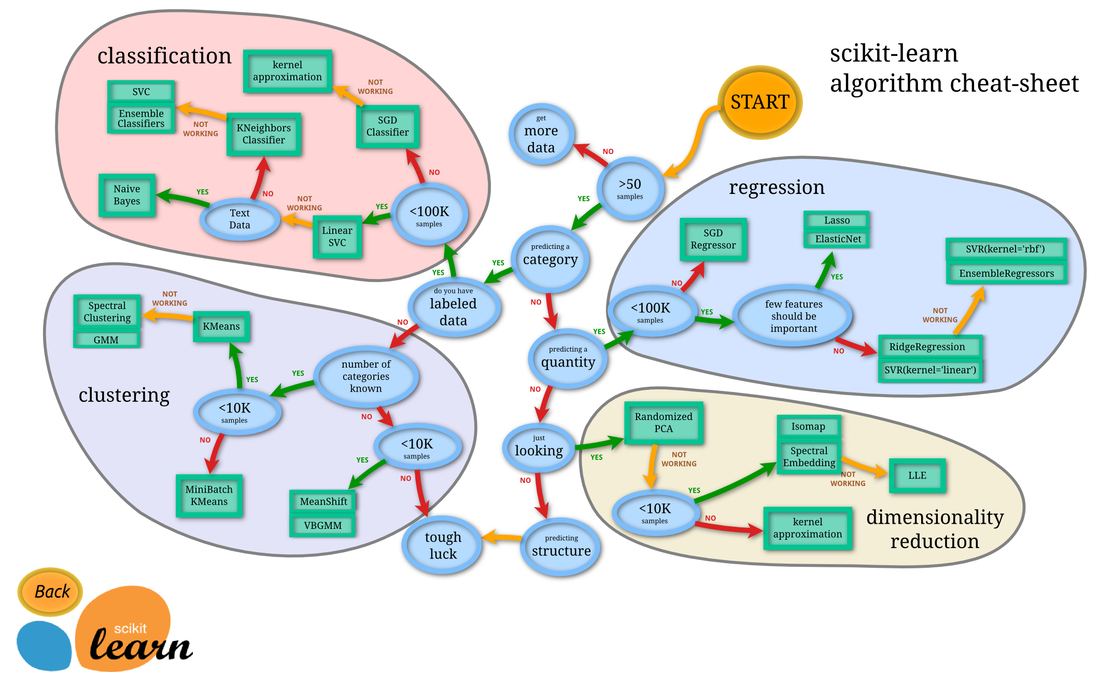
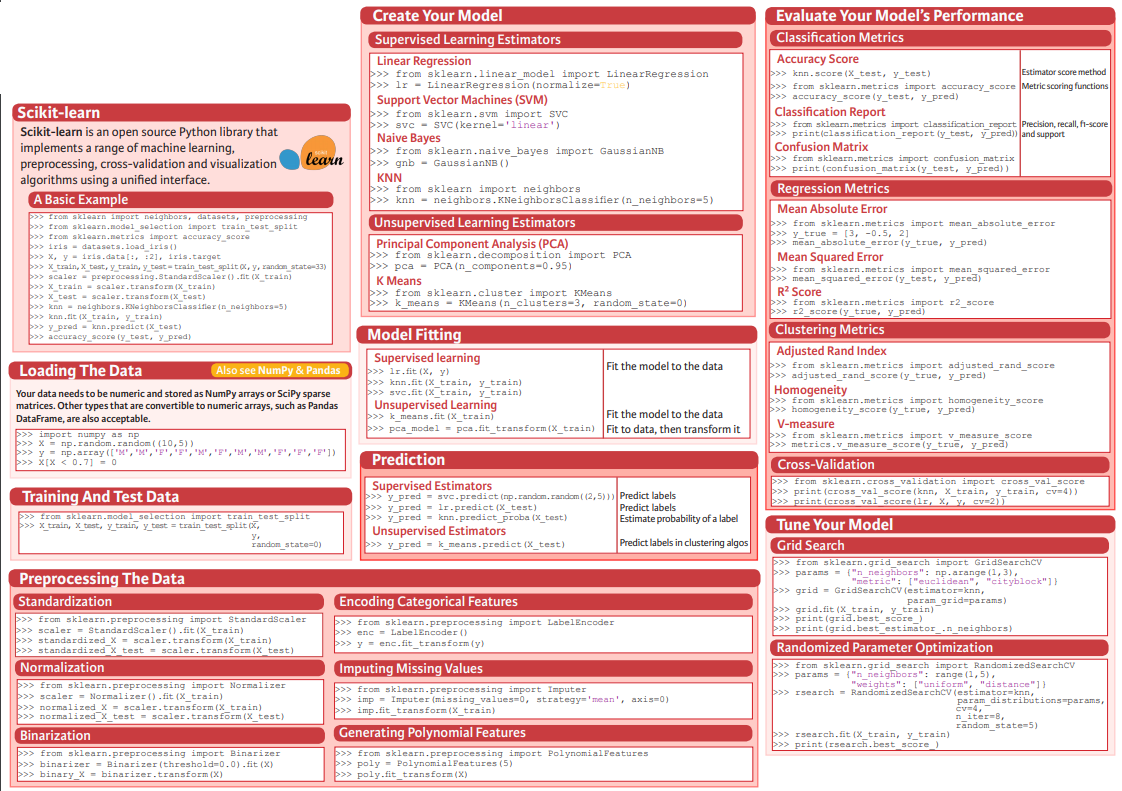
Most data scientists may not be leveraging the proper models for the optimal business solution. If your firm uses python, a general purpose programming language, we highly suggest you leverage scikit-learn, a machine learning library in python. Likewise, the algorithm cheat sheet below should ensure that the proper models are being used for the proper business problems with the correct amount of data. Does your data science team know this graph below?  Lastly, we pasted an image of a datacamp graph that provides source code for machine learning tutorials. 
Picture
Picture
get help with data science
0 Comments

Limitations Of Financial Models

8/2/2020

1 Comment

 
Picture


​


​Unfortunately, many models used on wall-street are assuming a normal distribution, and many schools are teaching with assumptions of a normal distribution. What we have done is actually go all the way back to the 1960's, and from the attached spreadsheet one can actually see across sector which industries belong to which statistical distributions, and it does change every few years. On top of data science and algorithmic trading, these models are often inaccurate, and need augmentation to consider all of the data points. We are actively working on a product that should be available in two years time that addresses these inefficiencies in the markets. In the meantime, feel free to play with the spreadsheet.

statistical_distributions.xlsx

​

Get Help With Trading Research
1 Comment

XBRL Data Quality For Financial Applications

8/2/2020

0 Comments

 
Picture


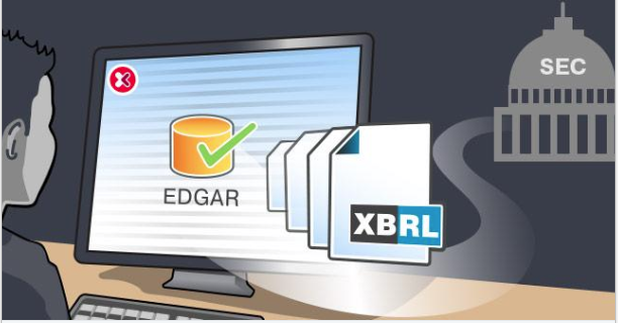
               This post is a re-post from altova's blog in regards to how inaccurate publicly available financial data is for consumers. We have worked for many premier financial institutions, and the data quality across all products in regards to accounting is quite an eye-opener.

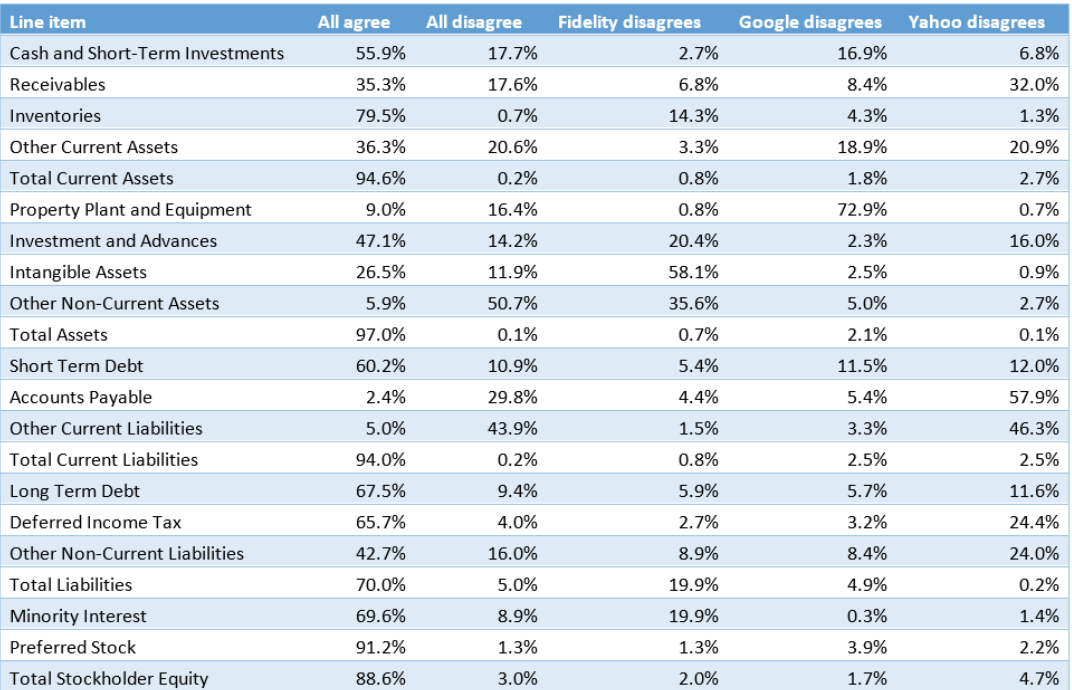
The  table below shows each line item on a firms financial balance sheet. For example, 'Other Current Liabilities', on the firms balance sheet would show the other current liabilities for a given firm. The data sources for the table are Fidelity, Google, and Yahoo. This means if one were to go to google's website for every publicly traded firm in the United States, that 43% of the data for current liabilities, on the balance sheet, does not match the data displayed on  Fidelity and Yahoo. Investment Science has spent three years in processing xbrl data directly from the government, which means we could analyze whether or not your firm's financial applications are actually publishing accurate accounting information.

Picture
get help with xbrl consulting
0 Comments
Forward

    Author

    Michael Kelly has been working within banking technology for over a decade, and his experience spans across algorithmic trading, project management, product management, alternative finance, hedge funds, private equity, and machine learning. This page is intended to educate others across interesting topics, inclusive of finance.

    Archives

    June 2025
    May 2025
    March 2025
    February 2025
    January 2025
    October 2024
    August 2024
    July 2024
    June 2024
    May 2024
    January 2024
    November 2023
    August 2023
    June 2023
    February 2023
    January 2023
    December 2022
    November 2022
    July 2022
    June 2022
    May 2022
    April 2022
    March 2022
    January 2022
    December 2021
    November 2021
    October 2021
    September 2021
    July 2021
    May 2021
    April 2021
    March 2021
    February 2021
    January 2021
    December 2020
    November 2020
    September 2020
    August 2020

    Categories

    All
    Agile Project Management
    Artificial Intelligence
    Change Management
    Compliance
    Data Science
    Disruptive Innovation
    Economic Analysis
    Education Training
    Financial Education
    Lending
    Marketing
    Natural Language Processing
    Portfolio Management
    Real Estate
    Technology Strategy
    Trading Research
    Venture Capital
    XBRL

    RSS Feed

Picture
WHAT WE OFFER  /  WHO WE SERVE  /  ABOUT /  PODCAST  /  INSIGHTS  /  CASE STUDIES  /  TESTIMONIALS  /  SAGEFUSION   /  CONTACT US  
OUR OFFICE
SAY HELLO
If you are interested in working with us or ​just want to say hello simply drop us a line!

Email: [email protected]
Phone: ​+1 (917) 512-9523
​
RESERVE TIME
OUR INSIGHTS
Stay up to date with our latest content from our insights page.
Subscribe To Our Insights
  ©2026 Investment Science®, LLC | All Rights Reserved  | Buy Our Book | Legal Statement